


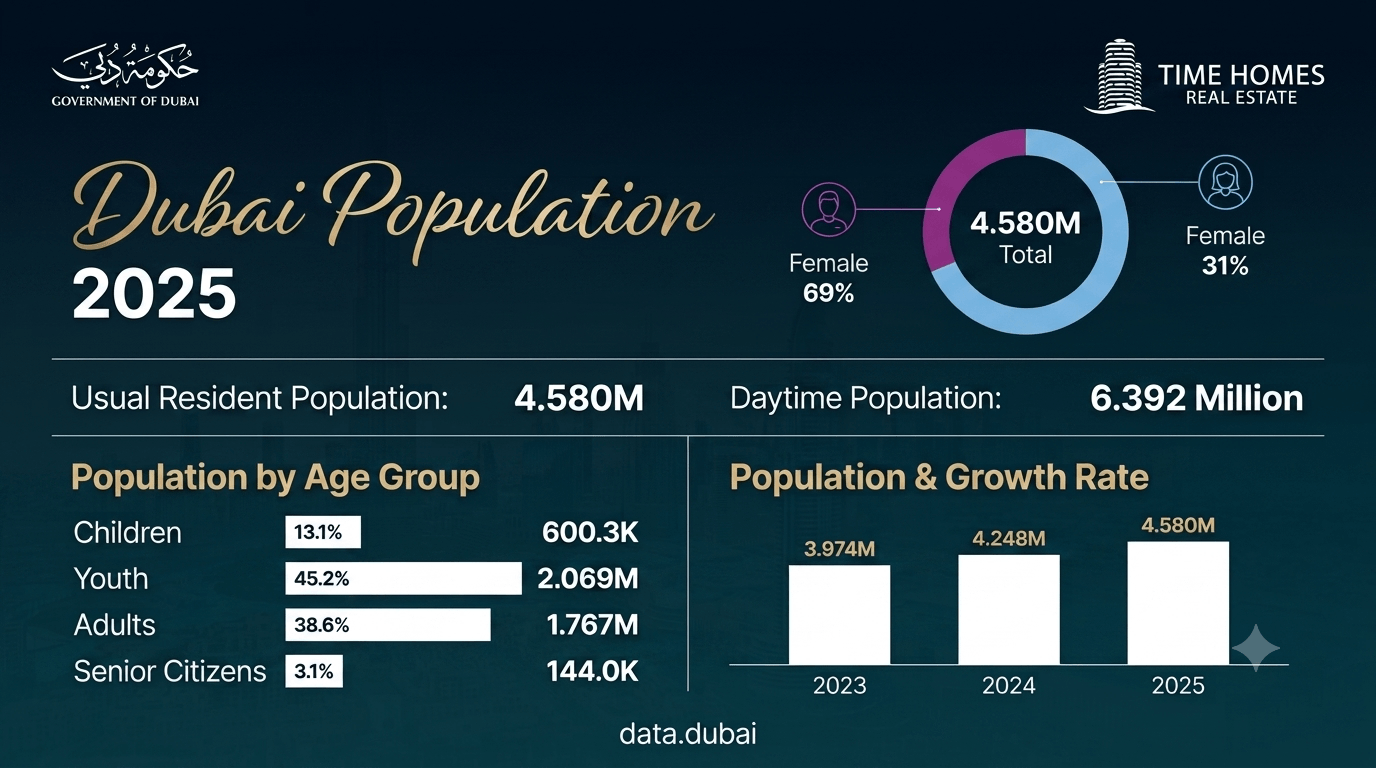
Dubai's population reached 4.58 million by the end of 2025, up roughly 332,000 from 2024 — a 7.5% annual increase, according to official Dubai data. That figure only tells part of the story. During peak daytime hours, the number of people actually present in the emirate climbs considerably higher, and the gap between the two numbers says as much about Dubai's economy as the growth rate itself.
Dubai Records 7.5% Population Growth
The 4.58 million figure represents Dubai's resident population, and the 332,000-person, 7.5% jump is among the fastest the emirate has recorded. The growth tracks closely with expansion in Dubai's labour market and rising demand for housing, retail, and public services — more people working in the city translates directly into more people living in it. The figures come from Dubai population data published through Data.Dubai, the emirate's official unified platform for government statistics.
Dubai's Daytime Population Reaches 6.392 Million
The resident count and the daytime count are not the same number, and conflating them understates how much activity the city actually absorbs on a given day. During peak hours, Dubai's population rises to 6.392 million once temporary arrivals are factored in — more than 1.812 million people present for work, tourism, study, or shopping who aren't counted among the 4.58 million residents. That's the figure that better reflects real demand on Dubai's roads, transit, retail space, and services at any given moment, and it's the more useful number for anyone trying to understand pressure on the city's infrastructure rather than just its housing stock.
Population Growth Shapes Dubai's Future Planning
Sustained growth at this pace puts direct pressure on housing, education, healthcare, and transport planning, and a growing resident base tends to widen demand across the Dubai real estate market generally, including interest in properties for sale in Dubai — though population growth on its own doesn't guarantee price appreciation; it's one input among several. Dubai is tracking this in closer to real time than most cities attempt: the Dubai Population Now initiative, approved by the Executive Council, uses AI-driven forecasting and a real-time population clock built on administrative records rather than periodic census surveys, feeding directly into housing, education, health, and transport policy.
Dubai's population has now grown for several consecutive years, and the 2025 figures suggest that trend isn't slowing. With daytime presence already outpacing the resident count by nearly 1.8 million people, the emirate's planning challenge is less about whether growth continues and more about keeping infrastructure ahead of it.